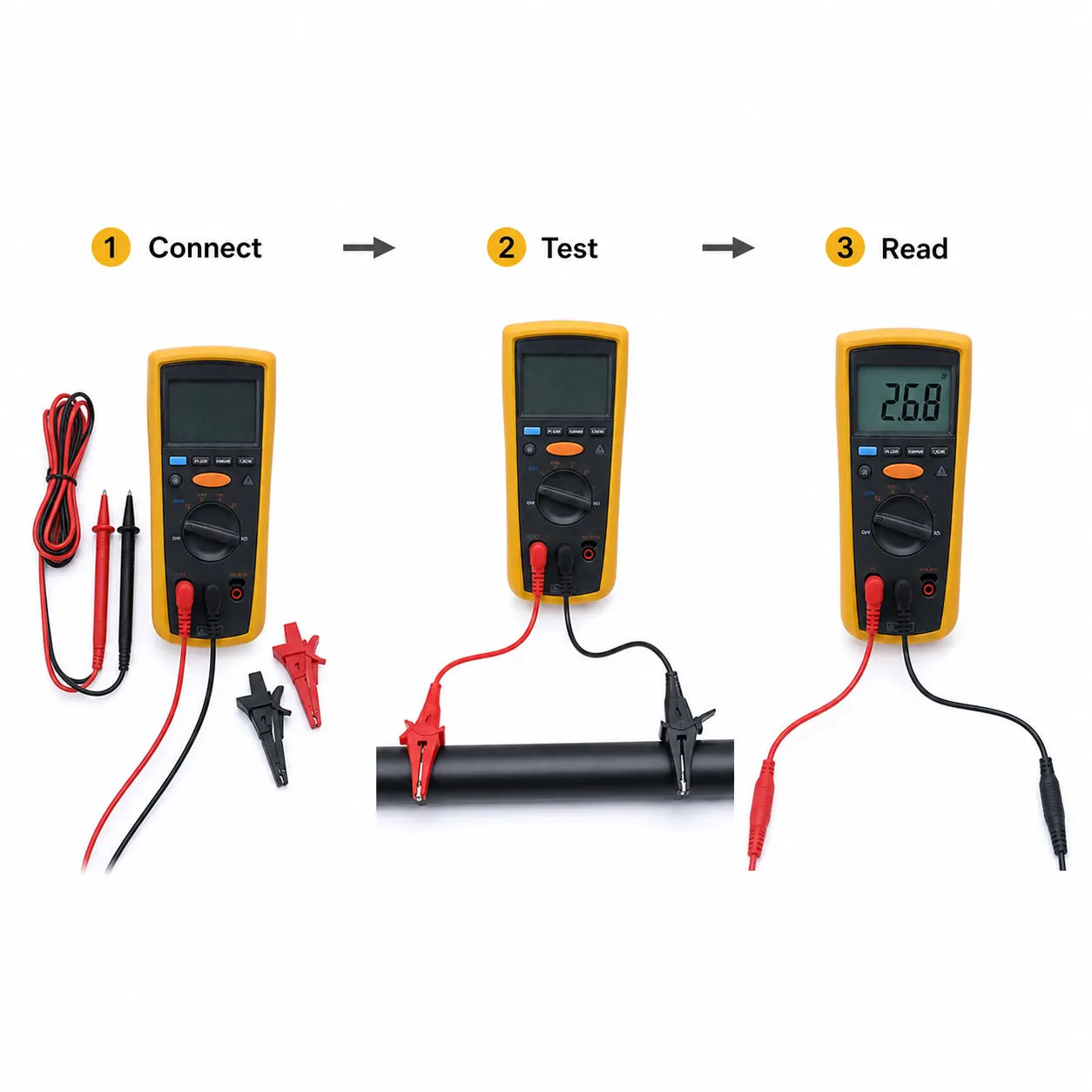
The immediate answer for a domestic testing visit

The best insulation tester for domestic electrician work is one that gives selectable insulation test voltages, supports repeat checks at a consumer unit, and helps prevent an insulation test being started on a live circuit. On the documented facts provided here, the Fluke 1507 is worth considering because it offers 50 V, 100 V, 250 V, 500 V and 1000 V insulation test voltages, a pass/fail comparison function, a remote probe with a test button, automatic PI and DAR calculation, and live-circuit detection above 30 V.
That does not automatically make it the right purchase for every electrician. A domestic contractor doing EICRs, remedial checks and new circuit verification must still decide whether a standalone insulation resistance tester fits their paperwork flow, whether they already own a multifunction tester, and whether the documented features justify the price for the way they work. The useful comparison is not simply Fluke versus another badge; it is standalone insulation tester versus MFT, quick repetitive checks versus full certification workflow, and documented facts versus assumptions that are not stated on the product record.
The UK domestic setting at the consumer unit
Picture a Monday morning EICR in a terraced house in Leeds, with the consumer unit tucked into a hallway cupboard and the occupier asking when the power will be back on. The insulation resistance tester has to support a careful dead-testing sequence, but it also has to be workable in tight spaces and repeatable across circuits. A remote probe with a test button matters in that kind of setting because the electrician may be moving between awkward terminals, labels, notes and the tester itself.
Domestic work is rarely as tidy as a training board. You may have connected loads, sensitive equipment, spurs that are not obvious, and a customer who does not understand why a circuit cannot simply be tested without preparation. The documented live-circuit detection above 30 V is relevant here because it is a protective workflow feature: it helps stop insulation testing when voltage above that level is detected. It is not a substitute for safe isolation, judgement, or inspection practice, but it is a meaningful check when the setting is busy and repetitive.
The documented facts to compare first
Start with the facts that are actually documented. The Fluke 1507 is listed as a handheld insulation resistance tester. The supplied insulation test voltages are 50 V, 100 V, 250 V, 500 V and 1000 V. The listing also documents automatic calculation of Polarization Index and Dielectric Absorption Ratio, a pass/fail comparison function, an included remote probe with test button, and live-circuit detection that prevents insulation testing when voltage above 30 V is detected. Those are the claims you can safely use for comparison.
What is not documented matters just as much. The supplied facts do not state calibration status, certificate compatibility, accuracy figures, kit contents beyond the remote probe, case contents, battery type, IP rating, CAT rating, warranty, or acceptance by a specific training provider, scheme, employer or reporting platform. A good buyer decision keeps those gaps visible. If any of those points decide the purchase for your business, check the product page or listed confirmation before treating them as settled.
Standalone insulation tester or multifunction tester
For a domestic electrician, the biggest comparison is often not between two standalone testers. It is whether a standalone insulation resistance tester is the right thing to buy at all. A multifunction tester may be required or preferred for wider EICR and certification workflows because it can cover more than insulation resistance testing. The Fluke 1507, on the information supplied, should be treated as an insulation resistance tester, not as a PAT tester, not as a basic multimeter, and not as a full MFT replacement.
That distinction helps avoid an expensive mismatch. If you already own an MFT and only need occasional insulation checks, a separate tester must earn its place by making certain jobs easier: repetitive fault finding, awkward board access, quick remedial checks, or workshop bench checks on equipment before it goes back to site. If you are buying your first serious test instrument as an apprentice or newly qualified electrician, confirm what your course, employer or assessment route expects before assuming a standalone tester will cover formal requirements.
Voltage selection as the practical buying check
The available test voltages are one of the strongest documented reasons to consider this tester for domestic and light commercial work. The supplied range of 50 V, 100 V, 250 V, 500 V and 1000 V gives the buyer a set of options rather than a single fixed test output. That is useful when the work involves different circuits, equipment conditions and levels of caution around connected electronics, provided the electrician follows the appropriate inspection method for the job.
Do not read the voltage list as permission to test everything at the highest setting. In occupied homes, small offices and workshops, the practical task is to choose an appropriate test voltage after isolation, disconnection decisions and risk checks have been made. The product facts support the existence of the voltage choices; they do not define when each voltage should be used, what threshold should pass, or how to handle every connected device. Those decisions belong to the competent person doing the work and the standards or procedures they are working to.
Workflow checks for an EICR or remedial bench
A domestic electrician doing repeat testing at a consumer unit may care less about headline claims and more about the rhythm of the job. The pass/fail comparison function is documented as a way to make repetitive tests quicker and more consistent. That can be useful when moving through circuits and wanting a simple comparison prompt, especially on remedial visits where the electrician is checking whether a fault-finding step has changed the result.
The remote probe with a test button is another workflow feature rather than a glamorous specification. On a packing bench, workshop test area or cupboard-mounted board, it can reduce the awkward back-and-forth between contact point and instrument. That does not remove the need to record readings properly, label circuits carefully or understand the result. It simply means the tester is built with repetitive and hard-to-reach test points in mind, which is relevant to the way domestic fault-finding actually feels.
Mismatches and buyers who should pause
Pause before buying if you need a full certification workflow from one instrument and do not already have an MFT. The documented facts position this as an insulation resistance tester. They do not say it performs loop impedance testing, RCD testing, continuity testing, certificate generation or report syncing. If your immediate problem is completing a full inspection and test schedule with one meter, this product may only cover part of the job.
Also pause if your buying decision depends on undocumented details. Some contractors need proof of calibration arrangements, a particular accuracy specification, a case, accessories, employer approval or scheme-recognised processes before a tool can be put into service. Those points are not supplied in the frozen facts here. Price-sensitive buyers should also compare the actual role of a separate insulation tester against lower-cost entry options or an MFT bundle, because the listed price is £1,386.14 with VAT included and free UK delivery under the supplied commerce policy.
A practical comparison checklist at the van door
Before ordering, run this working checklist against your next real job: at the consumer unit, will you be carrying out insulation resistance testing rather than needing every function of an MFT; do you need selectable 50 V, 100 V, 250 V, 500 V and 1000 V test voltages; will pass/fail comparison help with repetitive circuit checks; will a remote probe with a test button help in cupboards, boards or repeated test points; and does live-circuit detection above 30 V fit your safety workflow alongside proper isolation?
Then check the limits: do you need documented calibration evidence before use; do you require listed kit contents beyond the remote probe; do you need reporting software compatibility; are you expecting PAT testing, multimeter-only work or full certification coverage; and is the price sensible for the amount of insulation testing you actually do? If the answers point to frequent dead testing, awkward access and repeat fault-finding, the documented Fluke 1507 feature set has a clear role. If the answers point to full all-in-one certification, keep comparing.
The grounded next step before purchase
The sensible next step is to map the tester to one booked job, not to an imagined perfect toolkit. Take a typical domestic EICR, remedial return visit or new circuit verification and write down which parts of the visit require insulation resistance testing. If the task repeatedly needs selectable voltage options, quick comparison, and probe-led testing at awkward points, the documented features line up with a genuine use case rather than a brochure wish list.
If you proceed, buy with the known facts in view: Fluke 1507 insulation resistance tester, 50 V to 1000 V selectable insulation test voltages, pass/fail comparison, remote probe with test button, automatic PI and DAR calculation, and live-circuit detection above 30 V. Treat anything else as something to verify before relying on it. That keeps the purchase practical, defensible and suited to the way a UK domestic electrician actually has to work.