
Short answer: An insulation resistance tester for EICR work in the UK is one instrument within a larger inspection and testing process. The Fluke 1507 is listed by the retailer, and Fluke documents 50V, 100V, 250V, 500V and 1000V insulation test voltages, live-circuit detection above 30V, auto-discharge and CAT IV 600V protection. The official page also lists 200mA low-ohms earth-bond continuity and a remote probe. These functions do not make the device an EICR certificate or replace competent inspection, isolation and reporting. Match the tester to the procedure, records and calibration evidence required for the job.
Place insulation resistance inside EICR work
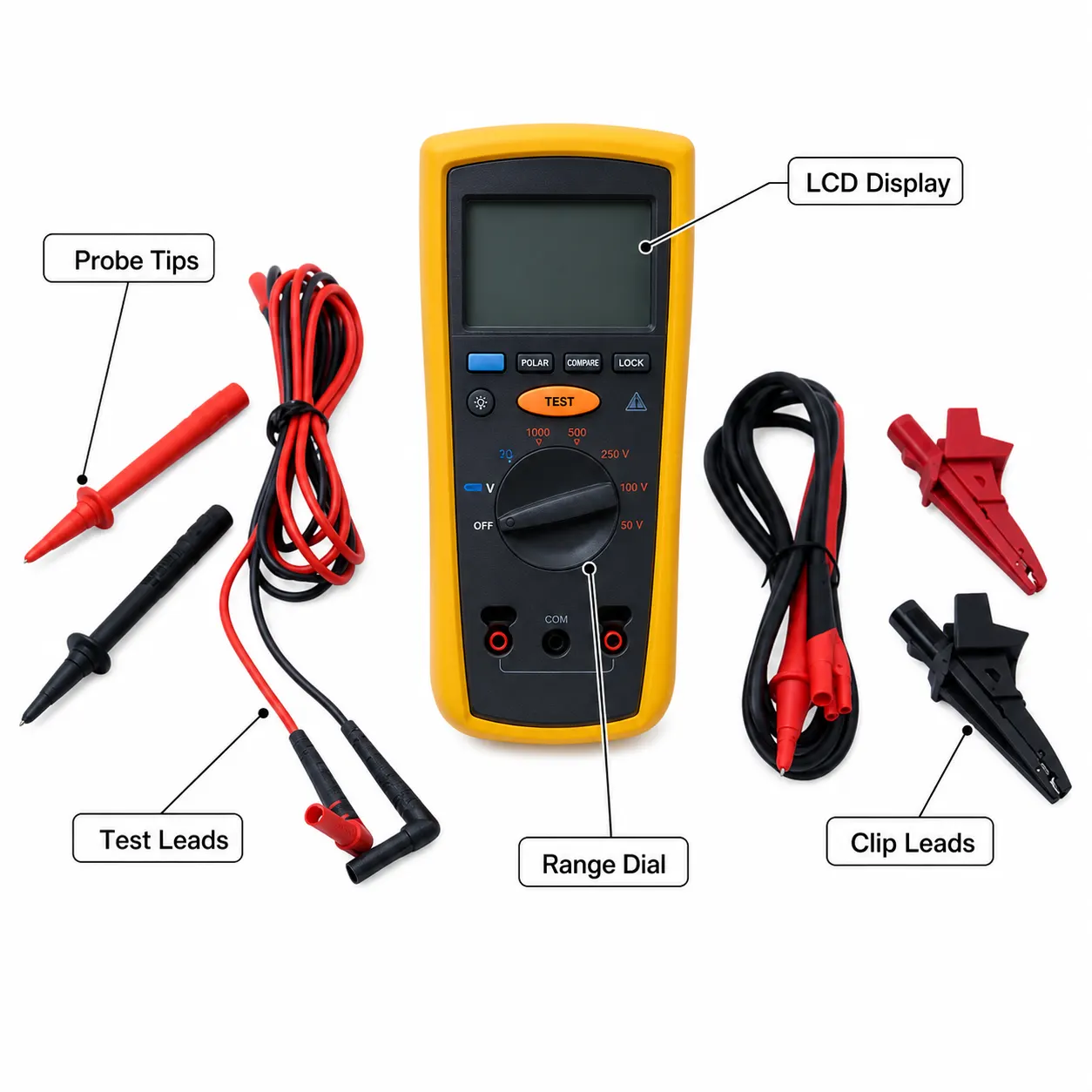
An EICR is a structured inspection and testing exercise, so an insulation resistance tester is only one part of the workflow. The Fluke 1507's listed functions can help with insulation and low-ohms measurements, but the result still needs the correct circuit identity, test conditions, interpretation and report entry.
The retailer page identifies the Fluke 1507 and includes a remote probe. It does not say that buying the instrument supplies an EICR certificate, proves a user's competence or confirms the current calibration status of the individual unit.
| EICR buying question | Documented Fluke point | Still required |
|---|---|---|
| Insulation voltage | 50V, 100V, 250V, 500V and 1000V listed | Select the voltage required by the applicable procedure |
| Continuity | 200mA lo-ohms earth-bond continuity listed | Record the correct circuit and test arrangement |
| Protection | Live detection above 30V and auto-discharge listed | Use safe isolation and control stored energy |
| Report | No EICR certificate function is established by the listing | Complete the inspection, testing and report through the responsible person |
Prepare for the test safely
HSE electrical-safety guidance should govern the boundary around electrical testing. Before applying a test, identify the circuit, isolate it using the authorised method, control access and confirm that the test arrangement is suitable. The Fluke live-circuit detection above 30V is an important listed function, but it is not a replacement for safe isolation.
The remote probe can help with repetitive or difficult-to-reach points. It does not make an energised, damaged or unknown installation safe. Use the manufacturer's instructions and the organisation's method statement.
- Identify the installation, circuit and EICR test procedure before connecting the tester.
- Confirm the instrument, leads, probes and calibration evidence are suitable for the work.
- Isolate, secure and prove the test boundary using the authorised process.
- Apply only the specified test and allow capacitive voltage to discharge as required.
- Record the voltage, reading, circuit identity and any condition that affects interpretation.
Interpret readings with the report context
A displayed resistance is not self-interpreting. The test voltage, circuit configuration, connected equipment, moisture, temperature, lead condition and procedure can all affect the meaning of a result. Automatic functions may help repeat a process, but they do not remove professional judgement.
Do not promise that one measurement will prove an installation safe or compliant. If a reading is unexpected, follow the responsible person's process for repeat checks, isolation and further investigation rather than changing settings until a preferred result appears.
Limits and checks before buying
The Fluke 1507 may fit EICR-related work where its documented voltage options, continuity function and remote probe match the procedure. Confirm the exact package, calibration evidence, batteries, leads and records required by the organisation or client.
The manufacturer does not specify that this retailer page alone establishes EICR compliance, a current calibration certificate, a user's competence or suitability for every installation. Treat those as separate checks before purchase and before use.
Related guides and product details
For EICR work, buy the tester as one part of a competent inspection system and verify calibration, safe isolation, records and procedure separately. Read 250V, 500V and 1000V Insulation Tester: What to Check for related guidance. Read Best Insulation Tester for a Domestic Electrician for related guidance. Review the documented specification on the Fluke 1507 insulation resistance tester product page before ordering.
Sources and safety context
- Supports the listed Fluke 1507 identity and included remote probe. Current Meterenhanced Fluke 1507 product page.
- Supports the official test voltages, live detection, auto-discharge, CAT IV 600 V, continuity and remote-probe details. Fluke 1507 Insulation Resistance Tester.
- Supports safe electrical procedures, suitable equipment and competence boundaries. Electricity at work: safe working practices.